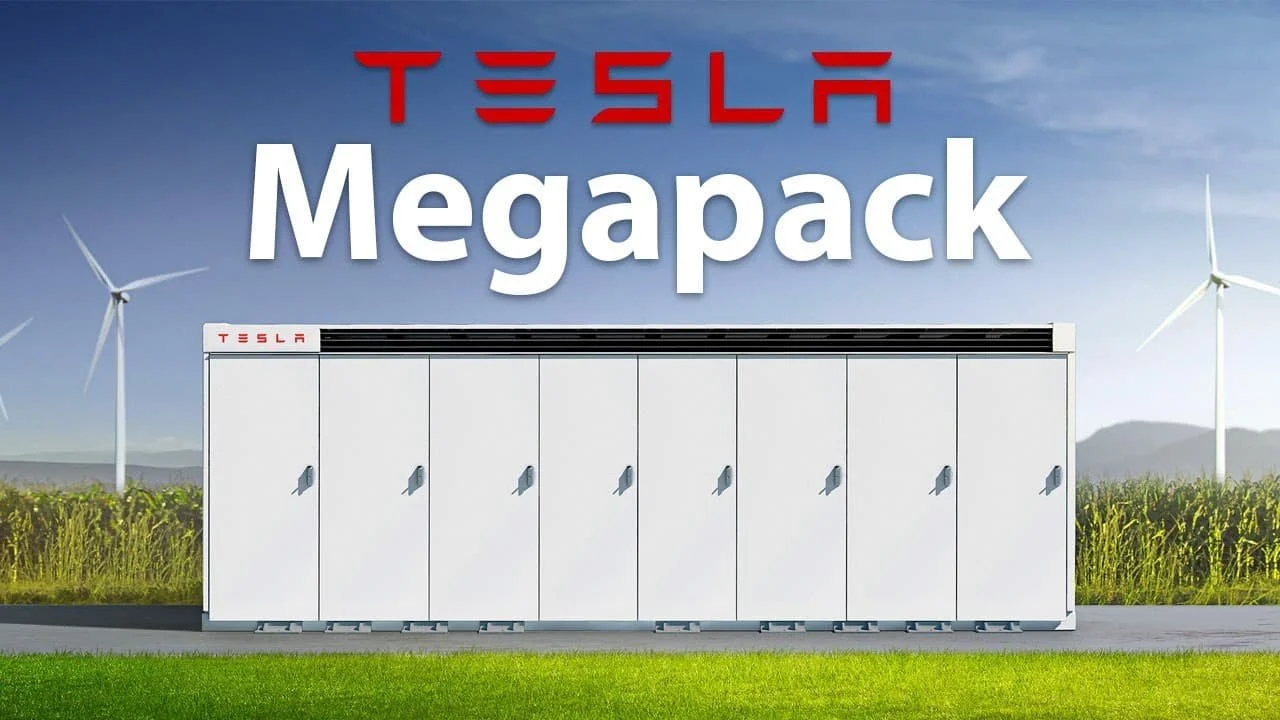
As demand for AI and data centers skyrockets, the world has entered an unprecedented “war for power.” Currently, solar energy boasts the lowest Levelized Cost of Energy (LCOE) per megawatt (MW) among all sources. Yet, paradoxically, Big Tech titans like Meta and Microsoft are still doubling down on natural gas power plant contracts.
We analyze why solar—the “cheapest energy”—is currently “unusable” for immediate needs, and where the true opportunities lie for investors amidst this massive paradigm shift.
[Insight 1] Viewing Tesla Solely Through EV Sales is an ‘Outdated Perspective’
Many investors tether Tesla’s stock price exclusively to EV delivery numbers. However, this is a reductive view that overlooks the vast energy ecosystem Elon Musk is architecting. Tesla is moving beyond auto manufacturing toward vertical integration that encompasses raw materials, finished energy products, and AI-driven energy trading software.
“Evaluating Tesla’s enterprise value based on EV sales alone is a relic of the past.”
- Pivot to Energy: Tesla has codified a goal to establish a 100GW integrated solar production system in the U.S. by 2028—an overwhelming scale nearly 20 times the current total U.S. capacity.
- Tangible Momentum: Reports of Tesla negotiating a $2.9 billion equipment deal with Suzhou Maxwell, the world’s largest solar equipment maker, prove they are seizing “manufacturing sovereignty” rather than just acting as an assembler.
- The Power of Software: The core profit layer of Tesla Energy will be its AI trading software, which optimizes when to sell power generated by solar and stored in ESS.
Key Takeaway: Tesla’s strategy is to dominate the entire energy value chain: Production → Storage → AI Trading.
[Insight 2] Solar is Cheap, but Without ESS, It’s a ‘Paper Tiger’
Data centers require 24/7/365 uninterrupted power. Solar energy’s fatal flaw is its intermittency; no matter how low the cost, it becomes useless the moment the sun sets.
- Supply Chain Risk: Over 80% of the world’s solar cells are produced in China. This poses a significant geopolitical supply chain risk for Big Tech.
- The Inevitability of ESS: To utilize cheap daytime energy at night, large-scale Energy Storage Systems (ESS) are mandatory. While ESS adds initial costs, rapid advancements in battery technology are driving these expenses down annually.
Key Takeaway: ESS is not an option but a necessity to overcome solar’s limitations, signaling a massive market expansion for the battery industry.
[Insight 3] Musk’s Ultimate Solution: Data Centers Heading Beyond Earth

Terrestrial solar power hits a wall with weather dependency and the need for vast land. Regulatory documents from El Paso explicitly state that securing the immense acreage required for high-capacity power is practically impossible.
- Space-Based Solar: Utilizing SpaceX’s LEO (Low Earth Orbit) satellites to generate uninterrupted power in space, free from atmospheric interference.
- Energy-AI Synergy: Placing data centers directly in space to perform AI computations and transmitting only the “results” (data) back to Earth. This bypasses land regulations and environmental hurdles in one stroke.
Key Takeaway: Musk’s vision to transcend physical limits via space-based energy and compute models could be the ultimate game-changer.
[Insight 4] The End of the Battery Slump? ESS Powers a New ‘Turnaround’
For South Korean battery makers struggling with slowing EV demand, the North American ESS market is becoming a land of opportunity. Specifically, the move to exclude Chinese batteries from the U.S. grid provides a monopolistic advantage to Korean firms.
- Unprecedented Growth: New ESS installations in the U.S. are expected to hit 26GW in 2026 alone—the largest in history for a single year.
- Strategic Positioning:
- Samsung SDI: Leveraging its unique position as the only prismatic battery maker in the U.S. to target the high-margin ESS market.
- LG Energy Solution: Utilizing its large-scale North American production expertise to rapidly expand market share and drive a financial turnaround.
Key Takeaway: The explosive growth of the ESS market, once overshadowed by EVs, will be the primary catalyst for a rebound in large-cap battery stocks.
[Insight 5] The Realistic Compromise: ‘Gas Turbines for Today, Solar+ESS for Tomorrow’
Realistically, only natural gas (gas turbines) can immediately satisfy the surging power needs of data centers. Big Tech chooses natural gas based on three clear criteria:
- 24/7 Reliability: Uninterrupted supply (impossible for solar without ESS).
- Speed of Construction: Rapid deployment to match skyrocketing demand.
- Supply Chain Stability: Stable procurement compared to the China-dependent solar industry.
- Cost Inversion: While gas turbines hold the edge today, falling battery prices will soon lead to a “Cost Inversion” point where the operational costs of Solar+ESS become lower than gas-fired plants.
Key Takeaway: While gas-centered hybrid strategies dominate today, the investment horizon must focus on the “Solar+ESS” of tomorrow, where cost inversion is inevitable.
Conclusion: Is Your Portfolio Ready for the Future of Energy?

The energy paradigm is in a massive transition from fossil fuels to the synergy of “Renewables + ESS.” As investors, we must look beyond mere trends and focus on companies that control the entire value chain—from production and storage to AI-driven trading.
Ask yourself: “When the Solar+ESS combo, which seems inefficient today, surpasses the cost-efficiency of gas in five years, where will you be standing?”
The winner of the future energy war is already being decided. Only prepared investors who can endure volatility and ride this massive tide will share in the rewards.
Leave a Reply