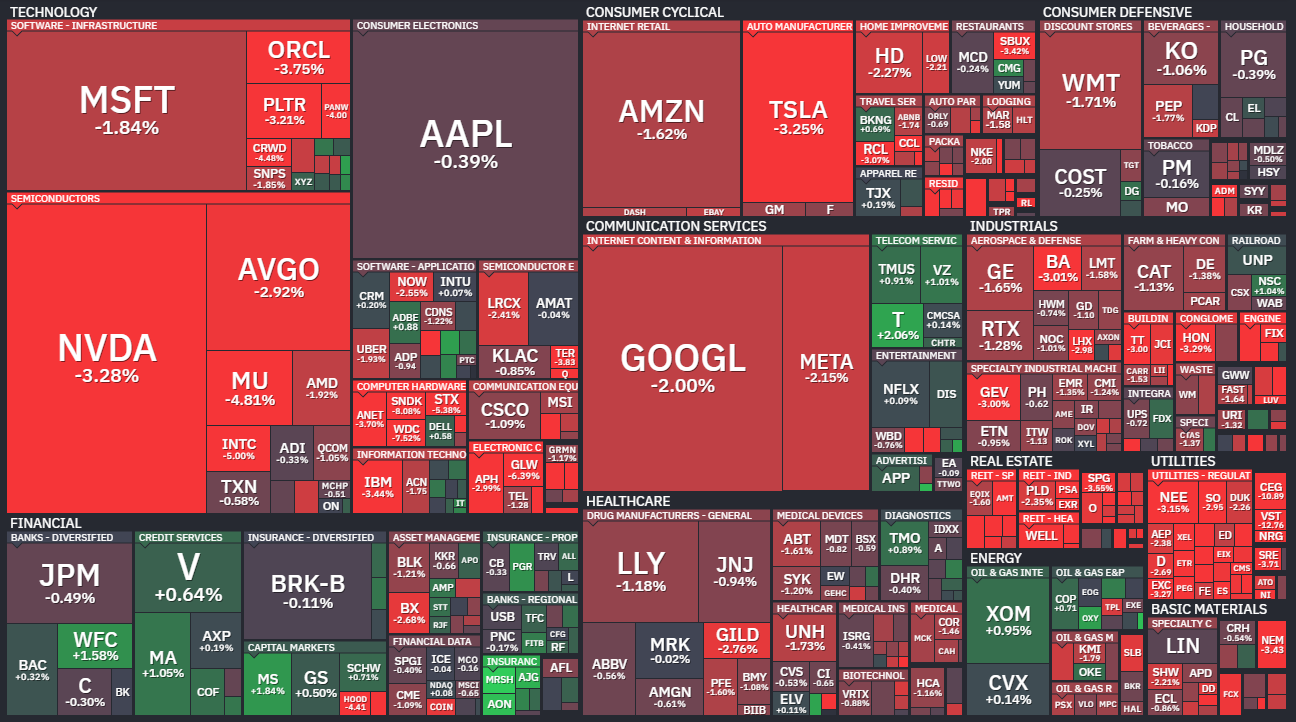
Let’s be honest—watching the screen lately hasn’t been easy. With the geopolitical noise from Iran and the Nasdaq’s sharp correction, the temptation to “just hit sell” is real. Most people are stuck in that classic psychological paralysis: too scared to buy the top, and even more terrified to buy the dip. But as we navigate this, I’m looking past the fear and focusing on where the real money is moving. Here’s how I’m playing this market.
1. Separating the Noise from the Signal: My Take on the “Icons”
The 33% crash in Super Micro Computer (SMCI) was a gut-punch for the semiconductor sector. But was it a fundamental collapse or just messy noise? I lean toward the latter. When the crowd screams “illicit shipments,” I see a temporary sentiment shock that hasn’t touched the core AI demand.

- Tesla (TSLA) at $367: High Stakes, High Reward. I’ll admit, catching this falling knife is risky. With the FSD investigations intensifying, Tesla is in a fight for its narrative. It’s trapped in a downward channel, and while $367 is a critical support, I’m not jumping in blindly. I’m waiting for the floor to stabilize. This is where professional discipline beats retail hope.

- The Yield Cushion: While everyone chases growth, I’m looking at Realty Income (O). At a 5.18% yield, it’s a boring play that keeps the portfolio breathing while others bleed.
- Our Secret Weapon: The Dollar. Here’s the reality most global analysts miss: for us, the exchange rate is a massive insurance policy. With the USD/KRW hitting 1,506, our downside is being absorbed by the currency. Even if the stock price drops, the dollar’s strength keeps our real returns surprisingly resilient.
2. The $80 Billion Strategic Shift: Japan’s “Capital Shield”

The U.S.-Japan summit wasn’t just diplomatic theater; it was a massive capital reallocation. Japan is essentially buying its security through energy investments. They’re betting $80 billion—not on weapons, but on SMRs and gas infrastructure.
I’m particularly focused on GE Vernova (GEV). Unlike many “future-tech” stocks, GEV has actual boots on the ground in Ontario, building the Western world’s first SMR. They are the backbone of the AI data center boom. When you see a company with a $40 billion expansion plan backed by Japanese capital and U.S. energy needs, you don’t ignore it. This is a structural play, not a trade.
3. The Passive Money Stampede: The S&P 500 Rebalancing
On the 23rd, roughly $3 trillion in passive funds will start moving like a mindless machine. This isn’t about “feelings”—it’s about math.
The newcomers like Vertiv and Lumentum aren’t just random additions; they are the “plumbing” of the AI era. If Nvidia is the brain, these companies are the cooling system and the nerves. I expect a massive inflow here, but a word of caution: I’ve seen this movie before. Mechanical buying is often followed by a 1-2 week “dump” as traders take profits. I’m not chasing the initial spike; I’m looking for the entry after the dust settles.
4. Microsoft (MSFT): A Generational Discount or a Value Trap?
This is the most controversial part of my current thesis. Microsoft is trading at its most “unusual” valuation in a decade. For the first time, its Forward P/E relative to the S&P 500 has dipped below 1.0.
The market is terrified of the “SaaS-pocalypse” and AI monetization delays. They think the party is over. I disagree. Microsoft’s fundamentals are still trending upward. I believe this is a classic case of the market over-correcting on fear. Is it possible I’m wrong and the AI growth has plateaued? Sure. But betting against Satya Nadella when the stock is at a 10-year relative low? That’s a bet I’m willing to take.
The Bottom Line: Volatility is the Price of Admission
Since 1990, the S&P 500 has dipped -5% several times a year. It’s the “cost of doing business” in the markets. We’ve seen 30 corrections since 2009, yet the index is up 1,258%.
I’m not closing my screen. I’m sharpening my list. The goal isn’t to avoid the waves; it’s to stay on the boat while the weak hands jump overboard. As Charlie Munger famously said, buying a great business at a fair price wins every single time.
Now is the time to be the “buyer of last resort” for quality.
“Not a recommendation, just a shared strategic outlook. These are my personal reflections for collaborative study. Trade at your own discretion, share your unique views, and let’s grow together.”
Leave a Reply